
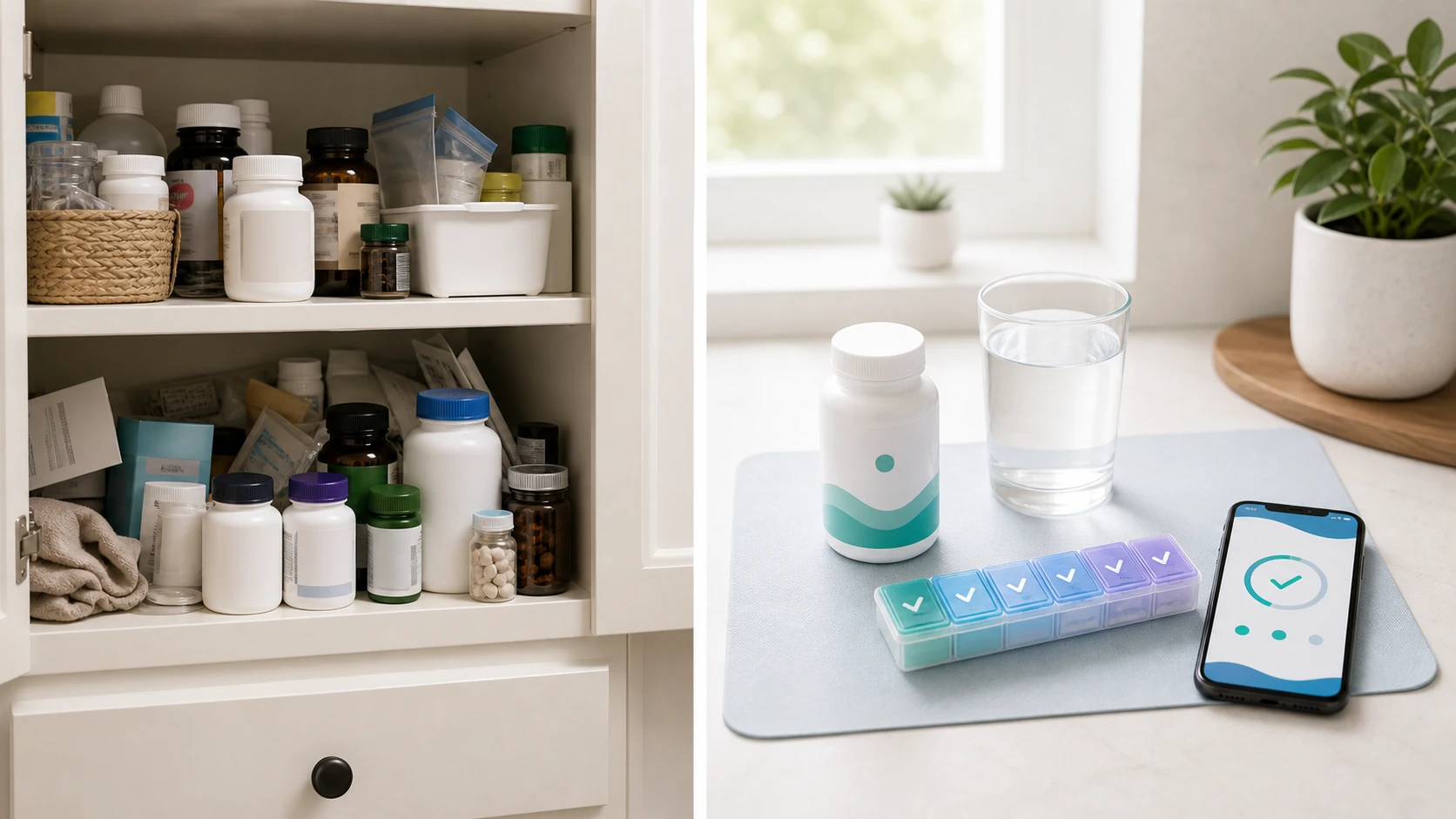
You probably do not keep forgetting your vitamins because you are lazy or undisciplined. You forget because your routine is not built clearly enough. The bottle is hidden, the reminder comes at the wrong time, the habit is not connected to anything, or you are trying to remember too many things at once. A vitamin routine works best when it is simple, visible, and tied to a part of your day that already happens. Once you understand why you keep forgetting, the fix becomes much easier.
You Are Relying on Memory Instead of a System
The biggest reason people forget vitamins is simple: they are trying to remember without enough support. For the practical system, use the main guide on how to remember to take vitamins.
Your Intention Is Too Vague
Most people start with a vague goal like, "I should take my vitamins every day."
That sounds reasonable, but it is not specific enough to become a daily habit. Your brain has to decide when, where, which bottle, whether it is with food, and whether you already took it. That is too much decision making for a busy morning.
A better plan is specific:
I take my vitamins after breakfast.
I keep them by my coffee station.
I get a reminder at 8:30 AM.
I take them with water.
I mark them complete.
This works because it removes guesswork. Instead of trying to remember a general intention, you follow a repeatable sequence.
A vague intention is easy to forget, but a specific routine is much easier to follow.
You Do Not Have a Trigger
A trigger is the thing that reminds you to act.
If nothing in your day tells you, "Now it is time to take vitamins," the habit has to survive on memory alone. That is unreliable. A strong trigger could be breakfast, coffee, brushing your teeth, filling your water bottle, feeding your dog, or sitting down at your desk.
The best triggers are already automatic. You do not need to remember to make coffee if you already do it every morning. You just attach the vitamin routine to that existing behavior.
Examples:
After I make coffee, I take my vitamins.
After I brush my teeth, I take my evening supplement.
After I fill my water bottle, I check Vitamin Alerts.
After breakfast, I take my morning supplements.
This is much easier than randomly hoping you remember sometime during the day.
If your vitamin routine has no trigger, it has no clear starting point.
You Are Waiting to Feel Motivated
Motivation is not a reliable reminder system.
Some days you feel organized, healthy, and ready to improve your life. Other days you are tired, rushed, distracted, or stressed. If your vitamin habit only works when you feel motivated, it will break as soon as life gets busy.
A better system does not require a big emotional push. It should feel boring and automatic.
The routine should be so simple that you can do it on a normal day:
- See the vitamins.
- Get the alert.
- Take them with water.
- Mark complete.
- Move on.
- That is enough.
The best vitamin routine does not depend on motivation. It depends on repetition.
If your problem is a crowded calendar, vitamin routine for busy people shows how to keep the habit small enough for normal days.
If you keep forgetting your vitamins, the first fix is to stop relying on memory and build a small system around the habit.
Your Vitamins Are in the Wrong Place
Your environment may be making the habit harder than it needs to be.
The Bottle Is Hidden
If your vitamins are in a cabinet, drawer, closet, bag, or shipping box, they are easy to forget.
Out of sight often becomes out of routine. You may own the product, want to take it, and still miss it because nothing in your environment reminds you. A hidden bottle forces your memory to do all the work.
Fix this by placing your daily vitamins where the routine happens.
Good locations:
- Near your coffee maker
- Near your breakfast area
- Next to your water bottle
- In a desk drawer you open every morning
- Near your toothbrush for evening supplements
- In a weekly pill organizer near your routine spot
Always store vitamins according to the label, and keep them safely away from children and pets. The goal is visibility with common sense.
If the bottle is hidden, the habit is hidden too.
You Do Not Have Water Nearby
Small friction kills habits.
If your reminder goes off but you need to find water, open a cabinet, search for the bottle, and figure out the serving size, you are more likely to delay it. Once you delay it, you are more likely to forget.
Keep the routine ready before the reminder happens.
A simple setup:
- Vitamins in one place
- Water nearby
- Reminder set
- Clear serving plan
- Easy checkoff
This setup removes the tiny obstacles that cause people to skip.
If taking vitamins requires too many small steps, you will skip them more often.
You Have Too Many Bottles in the Routine
Too many bottles can make your routine feel confusing.
If you have ten supplements sitting together with no clear schedule, your brain has to sort the whole routine every day. Which ones are morning? Which ones are night? Which ones are daily? Which ones are occasional? Which ones are you no longer taking?
That confusion creates hesitation, and hesitation creates missed days.
Separate your supplements into three categories:
- Daily routine
- Occasional use
- Not using right now
Only the daily routine belongs in your daily vitamin station. Everything else should be separate.
A clean routine is easier to remember than a cluttered one.
Your environment should make the vitamin habit obvious, not hidden, confusing, or inconvenient.
Your Reminder Is Not Working
A reminder only helps if it arrives at the right time and tells you what to do.
The Reminder Comes at the Wrong Time
Many people set a vitamin reminder for a time that sounds good but does not match real life.
For example, 7:00 AM may sound like a healthy time to take vitamins. But if you are always rushing, driving, getting dressed, or dealing with your day, you will dismiss the alert. After a while, your brain learns to ignore it.
The right reminder time is not the perfect time. It is the time you can act.
Ask yourself:
- Am I usually home at this time?
- Are my vitamins nearby?
- Do I have water?
- Am I usually distracted?
- Do I normally eat around this time?
- Can I take action within one minute?
If the answer is no, change the reminder.
A reminder that comes at the wrong time becomes noise.
The Reminder Is Too Vague
A vague reminder is easy to dismiss.
If your phone says "vitamins," you still have to think. Which vitamins? With food? Morning or night? Did you already take them? Is this for today or a leftover alert from yesterday?
A better reminder gives a clear instruction.
Use reminder labels like:
- Take morning vitamins with breakfast
- Take vitamin D after coffee
- Take magnesium after brushing teeth
- Take supplements with lunch
- Check Vitamin Alerts and take today's vitamins
Specific reminders are easier to follow because they reduce the amount of thinking required.
A good reminder should tell you the next action clearly.
You Have Too Many Notifications
If your phone is constantly alerting you, one more reminder is easy to ignore.
Notification fatigue is real in everyday life. If your vitamin reminder feels like just another buzz, it will not stand out. This is why your reminder system should be clean and intentional.
To reduce notification fatigue:
Use one main vitamin reminder at first.
Make the reminder specific.
Remove reminders for supplements you no longer take.
Do not set five alerts when one will work.
Review your reminder times monthly.
Vitamin Alerts works best when the reminders are meaningful, not excessive.
Fewer, clearer reminders are usually stronger than constant alerts.
If your reminders are too vague, too frequent, or badly timed, they will not solve the forgetting problem.
Your Routine Is Too Complicated
Complicated routines are harder to repeat.
You Started With Too Many Supplements
A routine can fail because it is too ambitious.
If you go from taking nothing consistently to managing a full morning, afternoon, evening, and bedtime supplement schedule, you may overwhelm yourself. Even if each product is simple, the combined routine can feel like too much.
Start smaller.
A better beginner routine:
Choose one daily vitamin or supplement.
Set one reminder.
Put it in one visible place.
Take it at one reliable time.
Repeat for one week.
Add more only after the first habit feels easy.
This creates stability before complexity.
Build the vitamin habit first, then expand the routine later.
If you want a broader consistency plan, read how to stay consistent with daily supplements before adding more alerts.
You Are Not Sure What You Already Took
This is one of the most common reasons people stop.
You look at the bottle and wonder, "Did I take that already?" If you are not sure, the routine becomes stressful. You may skip because you do not want to accidentally take it twice. Or you may take it and keep wondering.
A tracking system fixes this.
You can use:
- Vitamin Alerts
- A weekly pill organizer
- A printed checklist
- A habit tracker
- A calendar checkmark
- A notes app
The most important rule is to mark it complete immediately after taking it. Do not wait until later.
Tracking removes the uncertainty that makes people hesitate.
Your Routine Has No Recovery Plan
People miss days. The problem is not missing once. The problem is not returning.
If you miss one day and think, "I already failed," you are more likely to abandon the whole routine. That mindset is too fragile. A strong routine has a recovery plan.
Use this rule:
Return at the next normal reminder.
Do not restart next week. Do not wait for motivation. Do not rebuild the whole system. Just return to the next scheduled dose.
A missed day should be a small pause, not the end of the routine.
The guide on what to do if you miss your vitamins gives you a simple recovery rule for exactly this situation.
A simple routine with tracking and a recovery plan is much easier to maintain than a complicated routine with no structure.
You Keep Running Out
Running out of vitamins breaks the habit even if your reminders are good.
An Empty Bottle Interrupts the Routine
A vitamin routine depends on the product being available.
If your reminder goes off but the bottle is empty, the habit stops. Then you need to reorder, wait, remember again, and rebuild the rhythm. That interruption can turn into weeks of inconsistency.
The solution is to reorder before the bottle is empty.
A simple rule:
Reorder when you have 7 to 14 days left.
This gives you enough time to restock without disrupting the routine.
Running out is not just a supply problem. It is a habit problem.
You Are Counting Capsules Instead of Servings
A bottle with 120 capsules may not last 120 days.
If the serving size is 2 capsules, that bottle has 60 servings. If you take one serving per day, it lasts about 60 days. If two people share it, it may last about 30 days.
Track servings instead of pieces.
Use this formula:
- Days left = servings remaining divided by servings used per day
This gives you a better estimate of when to reorder.
Serving count is the number that matters for refill planning.
You Do Not Have a Weekly Supply Check
Most people do not want to think about refills every day.
That is why weekly supply checks are useful. A vitamin reminder system should tell you when to take your vitamins. Your overall routine should also help you know when you are running low.
The ideal routine is:
- Add the vitamin.
- Set the reminder time.
- Track the schedule.
- Check supply once per week.
Reorder before the bottle is empty.
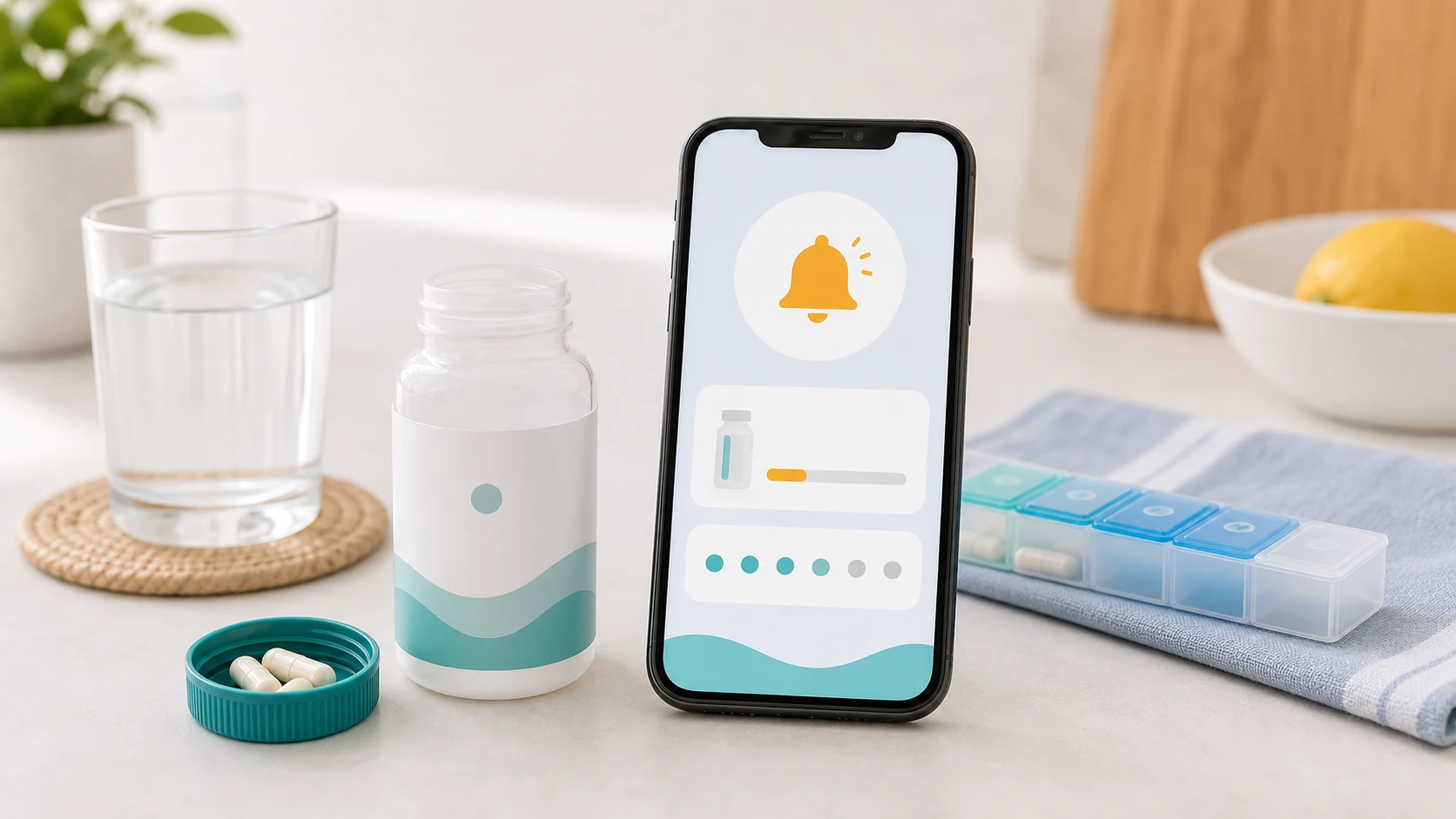
Weekly supply checks keep the routine from breaking at the refill stage.
Remembering vitamins is not only about daily reminders. It is also about making sure you never unexpectedly run out.
How to Stop Forgetting Your Vitamins
The solution is a simple system that combines habit, environment, reminders, and tracking.
Use the Four Part Vitamin System
A reliable vitamin routine has four parts:
- Cue
- Location
- Reminder
- Checkoff
The cue is the habit that starts the routine, such as breakfast or brushing your teeth.
The location is where the vitamins live.
The reminder is the alert that prompts you.
The checkoff is how you confirm that you took them.
Example:
- Cue: Morning coffee
- Location: Coffee station
- Reminder: 8:30 AM Vitamin Alerts notification
- Checkoff: Mark taken after finishing
This works because each part supports the next. You are not relying on one fragile reminder. You are building a routine with multiple supports.
The four part system makes forgetting less likely because the habit has structure.
For help turning those four parts into a real daily plan, use how to build a simple vitamin routine.
Start With One Main Reminder
Start simple.
Pick the supplement you most want to take consistently. Add it to Vitamin Alerts. Set one reminder at a time that fits your actual day. Place the bottle where the reminder happens. Take it daily for one week.
Only then add more.
This prevents the routine from becoming overwhelming before it becomes stable.
One consistent reminder is the best starting point.
Review and Adjust Weekly
Your first setup does not need to be perfect.
Once a week, review what is working and what is not. If you keep missing the alert, change the time. If the bottle is out of sight, move it. If the reminder is vague, rename it. If you are running low, reorder earlier next time.
Weekly review checklist:
- Did I miss reminders this week?
- Was the timing realistic?
- Were my vitamins easy to access?
- Did I know what to take?
- Is anything running low?
- Should I simplify the routine?
A weekly review keeps the system aligned with your real life.
The best way to stop forgetting vitamins is to make the routine obvious, specific, trackable, and easy to repeat.
Conclusion: You Are Not Forgetful, Your System Needs Work
If you keep forgetting your vitamins, the problem is probably not your character. It is your setup. Your vitamins may be hidden, your reminder may be vague, your routine may be too complicated, or you may be running out before you notice. The fix is to build a simple system: connect vitamins to a daily habit, keep them where you use them, set a clear reminder, track completion, and reorder before the bottle is empty. Vitamin Alerts is built to support that system by helping you add your vitamins and get reminded at the right time. The easier the system is, the more consistent you become.
FAQ
Why do I keep forgetting to take my vitamins?
You keep forgetting your vitamins because the routine probably does not have a strong cue, clear reminder, visible location, or tracking system. Most vitamin forgetting is a system problem, not a motivation problem.
How can I remember to take vitamins every day?
The best way to remember vitamins every day is to connect them to a habit you already do, such as breakfast, coffee, or brushing your teeth. Then set a clear reminder and mark the vitamin complete after taking it.
Should I keep vitamins where I can see them?
Yes, keeping daily vitamins visible can help you remember them, as long as they are stored according to the label and kept safely away from children and pets. A visible vitamin station can make the habit easier.
Is a vitamin reminder app better than a phone alarm?
A vitamin reminder app can be better than a basic phone alarm because it can connect the reminder to a specific supplement routine. Vitamin Alerts is designed to help you add your vitamins and get alerted when it is time to take them.
What should I do if I miss a day of vitamins?
If you miss a day, return at the next normal reminder. Do not treat one missed day as failure. The goal is to restart quickly and keep the routine going.
Why do I remember for a few days and then stop?
You may stop because the routine is too complicated, the reminder time is wrong, the bottle is hidden, or the habit is not connected to something you already do. Start smaller and make the routine easier to repeat.
Turn this guide into a real reminder routine.
Vitamin Alerts helps you add vitamins, choose routine times, test alerts, and come back to the same schedule tomorrow.
Comments
Public comments are coming later. For now, send article feedback or vitamin routine questions through the support page.
Contact support