
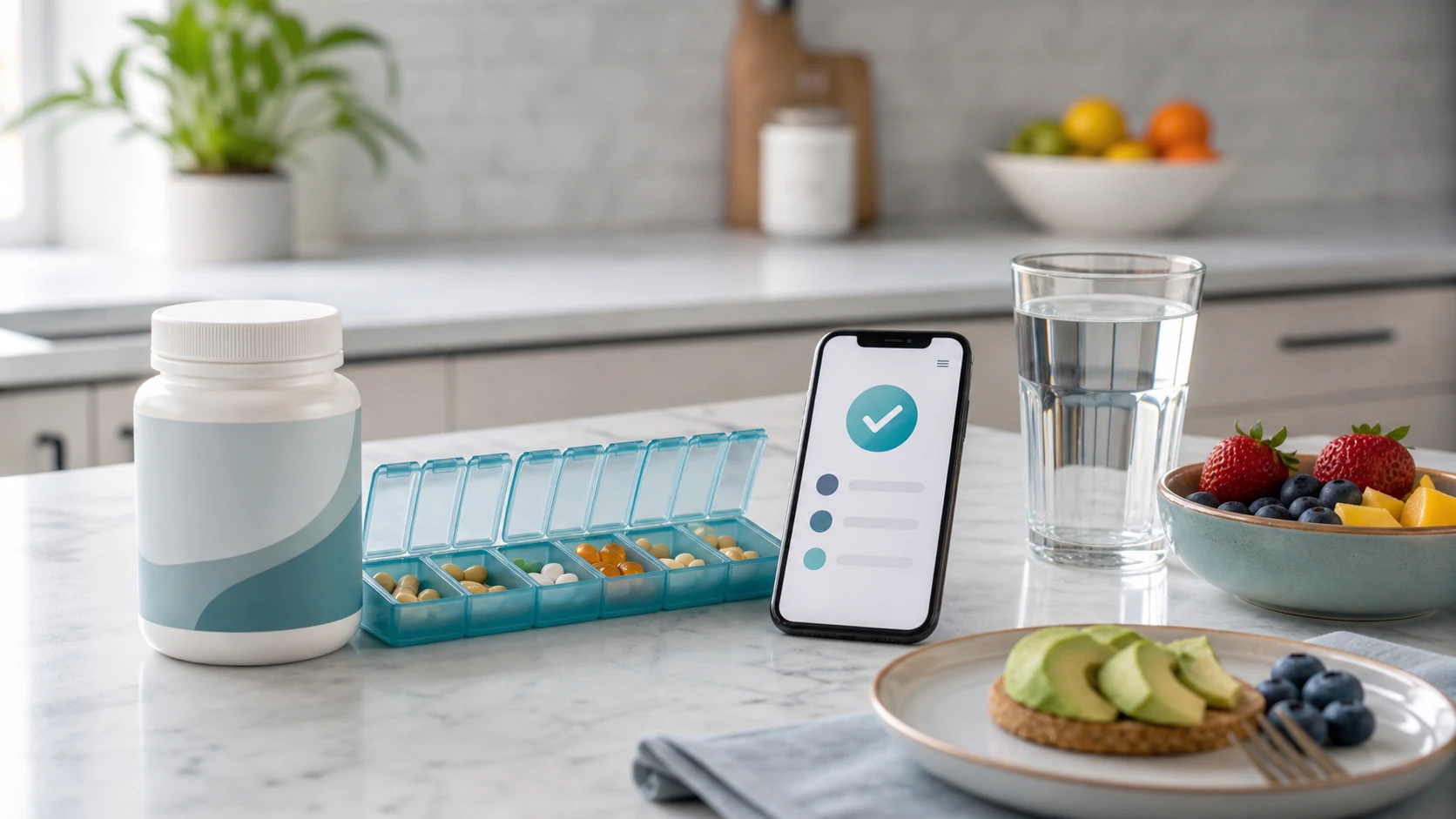
Most people do not fail with vitamins because they do not care about their health. They fail because vitamins are easy to forget. A bottle sits in a cabinet, the morning gets busy, the day gets away from you, and suddenly you realize you have missed three days in a row. The solution is not more motivation. The solution is a better system. When you make your vitamins visible, tie them to something you already do, and track them with a reminder, taking them becomes less of a task and more of a routine.
Build the Habit Before You Worry About Perfection
Remembering to take vitamins starts with habit design, not willpower. If you are not sure why the habit keeps breaking, start with the deeper guide on why you keep forgetting your vitamins.
Choose One Daily Anchor
The easiest way to remember vitamins is to connect them to something you already do every day.
A daily anchor is an action that already happens without much thought. For example:
- Making coffee
- Eating breakfast
- Brushing your teeth
- Filling your water bottle
- Feeding your pet
- Packing your bag
- Starting your workday
Instead of saying, "I need to remember my vitamins," make the instruction more specific:
- "After I make coffee, I take my vitamins."
- "After I brush my teeth, I check my vitamin reminder."
- "After breakfast, I take my morning supplements."
This works because your brain does not have to create a new routine from nothing. You are attaching the vitamin habit to a routine that already exists.
The best vitamin habit is usually the one connected to something you already do automatically.
Keep the Routine Small at First
A vitamin routine becomes harder to maintain when it feels complicated.
If you are trying to take six supplements at three different times of day, refill a pill organizer, track doses, drink more water, and change your whole lifestyle at once, you are more likely to quit. Start with the smallest version of the routine that you can repeat.
A simple starting routine could look like this:
Put your vitamins next to your breakfast spot.
Set one daily phone reminder.
Take them with water.
Check them off after you take them.
That is enough. Once the habit is stable, you can improve the timing, split morning and evening supplements, add a weekly supply check, or create a more detailed schedule.
If the timing is the part that feels messy, use the simple vitamin schedule template before adding more supplements.
Make the first version easy enough that you can do it even on a busy day.
If you miss a day anyway, use the simple reset plan in what to do if you miss your vitamins instead of treating one missed reminder like failure.
Do Not Restart From Zero After Missing a Day
Missing one day does not mean the habit is broken.
Many people forget their vitamins once and then mentally abandon the routine. That is the wrong approach. A missed day is just a missed day. The real goal is not perfection. The real goal is returning to the routine quickly.
Use this rule:
Never miss twice if you can avoid it.
If you forget Monday, simply take them Tuesday at your normal time. Do not double up unless your product label or healthcare professional specifically says that is appropriate. The goal is to protect the routine, not punish yourself for being human.
Consistency is built by returning quickly, not by being perfect.
If you build the habit around real life instead of ideal life, remembering vitamins becomes much easier.
Make Your Vitamins Easy to See and Easy to Take
Your environment should remind you before your brain has to.
Put Vitamins Where the Routine Happens
If your vitamins are hidden in a cabinet, you are asking your memory to do all the work.
Put them near the place where you want the habit to happen. If you take them after breakfast, keep them near your breakfast area. If you take them at night, keep them near your evening routine. If you take them at your desk, keep them in a visible but safe place where you start work.
The key is to make the bottle or organizer part of the scene. When you see it, you remember it.
Good places to keep vitamins may include:
- Near your coffee setup
- Next to your water bottle
- Beside your breakfast area
- In a desk drawer you open every morning
- In a weekly pill organizer near your routine spot
Always follow the storage instructions on the label. Some products need to be kept away from heat, sunlight, or humidity. Also keep all vitamins and supplements out of reach of children and pets.
Visibility matters because the best reminder is often the one you notice naturally.
Use a Pill Organizer if You Take More Than One Supplement
A pill organizer removes daily decision making.
Instead of opening multiple bottles every morning, you prepare your vitamins in advance. Then your only job is to open the right compartment and take what is scheduled for that time.
A pill organizer helps answer three common questions:
- Did I already take my vitamins today?
- Which vitamins do I take in the morning?
- Am I running low on anything?
If Tuesday morning is empty, you probably took Tuesday morning. If Friday is still full, you know you missed it. This is simple, but it works.
For a basic routine, a 7 day organizer is enough. For a more detailed routine, use one with morning and evening compartments.
A pill organizer turns vitamin consistency into a quick visual check.
Pair Vitamins With Water
A vitamin habit is easier when everything needed is already there.
If you often forget because you need to find water, solve that problem in advance. Keep a glass, water bottle, or shaker near your vitamin routine. This sounds small, but small friction is one of the biggest reasons people skip habits.
A good setup is:
Vitamins plus water plus reminder plus checkoff.
That gives you the full loop. You see the vitamins, hear or see the reminder, take them with water, then mark them complete.
The fewer steps your routine requires, the more likely you are to repeat it.
Make the action physically obvious, and your memory has less work to do.
Use Smart Reminders Instead of Random Alarms
A good vitamin reminder should tell you what to do, when to do it, and whether you already did it.
Set a Reminder for the Time You Are Most Consistent
Do not choose your reminder time based on what sounds healthy. Choose it based on when you are actually available.
For many people, mornings are best because the day has not become chaotic yet. For others, morning is the worst time because they rush out the door. The best time is the time you can repeat.
Ask yourself:
- When am I usually home?
- When do I normally eat?
- When do I have water nearby?
- When am I least likely to be interrupted?
- When do I already check my phone?
If your reminder goes off during a time when you are driving, rushing, working, or distracted, you will dismiss it. Set the reminder for a realistic moment, not an aspirational one.
The best vitamin reminder time is the time you can actually respond to.
If you want help choosing that moment, the guide to best reminder times for vitamins breaks down morning, meal, evening, and bedtime options.
Make the Reminder Specific
A vague reminder is easy to ignore.
Instead of setting an alert that says "Vitamins," make it specific and action based:
- "Take morning vitamins with breakfast."
- "Take magnesium after brushing teeth."
- "Check Vitamin Alerts before coffee."
- "Take supplements and mark complete."
Specific reminders remove the thinking. You know exactly what the reminder means and what action to take.
A clear reminder turns intention into instruction.
For a deeper setup walkthrough, use the guide on how to set supplement reminders on your phone.
Track Completion, Not Just the Reminder
A reminder tells you to take your vitamins. Tracking tells you whether you actually did.
This is the missing piece for many people. They set an alarm, dismiss it, and then later cannot remember if they took anything. A simple checkoff system solves that problem.
You can track with:
- A vitamin reminder app
- A paper habit tracker
- A calendar checkmark
- A notes app
- A pill organizer
- A daily routine checklist
For a dedicated system, Vitamin Alerts is being built around the main problem vitamin customers actually face: remembering to take what they already bought. A useful vitamin reminder system should help you set the schedule, get reminded at the right time, mark vitamins as taken, and eventually know when you are running low.
Tracking matters because the goal is not just to be reminded, but to know what happened.
Smart reminders work best when they are timely, specific, and connected to a checkoff.
Remove the Reasons You Keep Forgetting
Forgetting vitamins usually has a cause, and that cause can usually be fixed.
Problem: Your Vitamins Are Out of Sight
If your vitamins live in a drawer, cabinet, closet, or shipping box, they are too easy to forget.
Fix: Move them to the place where your routine happens. Keep them visible enough to remind you, but stored according to label directions and safely away from children or pets.
If you cannot see the habit, you are more likely to skip the habit.
Problem: You Have Too Many Bottles
A complicated supplement routine can create decision fatigue.
Fix: Simplify your routine. Decide what you take in the morning, what you take at night, and what you do not need in the daily rotation. Use a pill organizer or written schedule so you are not making the same decision every day.
The easier your routine is to understand, the easier it is to follow.
Problem: You Do Not Know If You Already Took Them
This is one of the most common issues.
Fix: Use a checkoff system. Mark the dose complete immediately after taking it. Do not wait until later. Later is when doubt starts.
A routine without tracking can still leave you guessing.
Problem: You Run Out and Never Restart
Running out breaks the routine.
Fix: Track supply before the bottle is empty. A helpful rule is to reorder when you have one to two weeks left. Until automatic supply tools are part of your setup, a weekly bottle check can prevent the "I ran out two weeks ago" problem.
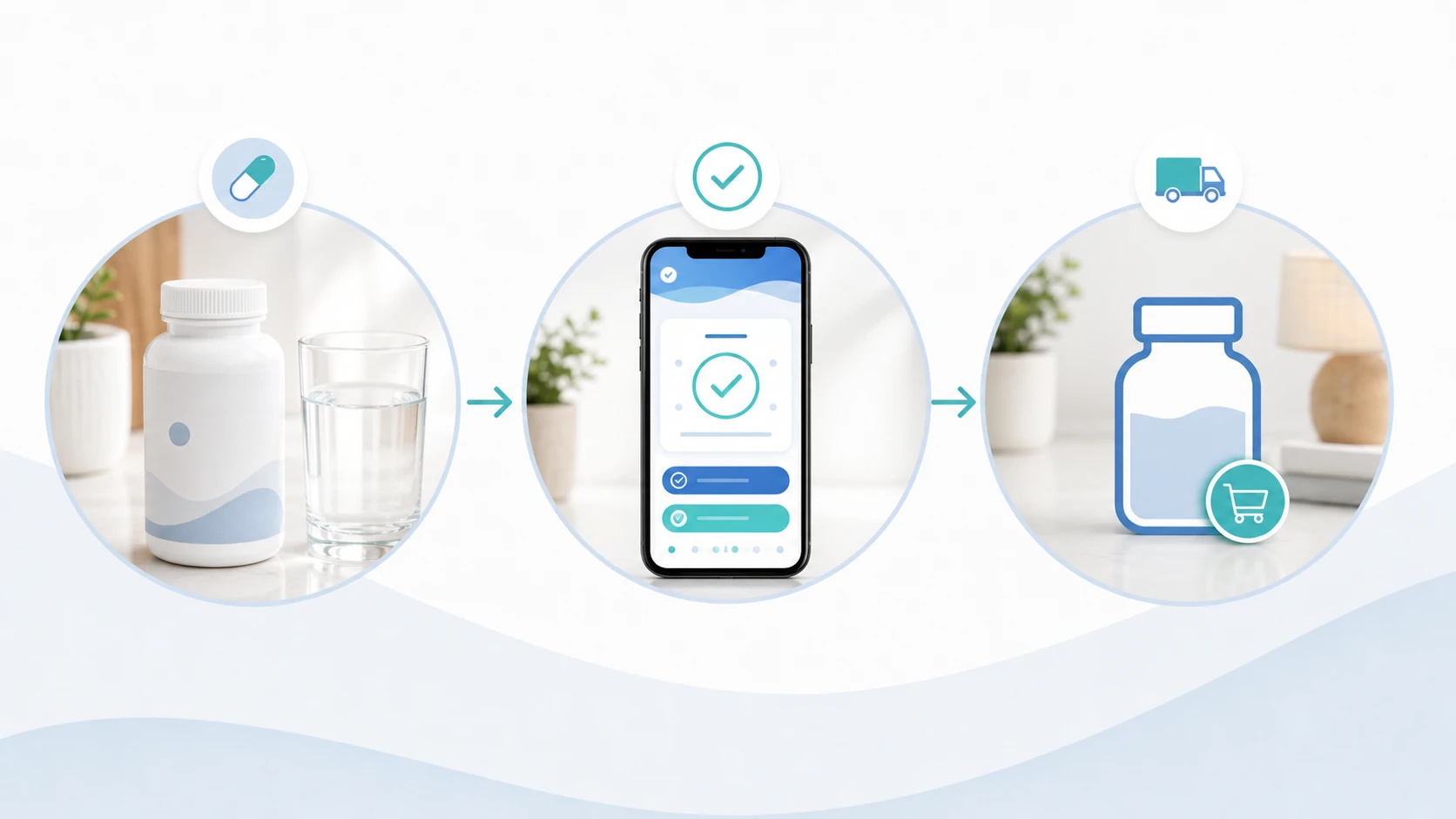
Remembering vitamins also means remembering to restock them before the habit gets interrupted.
Once you identify the real reason you forget, the fix becomes much easier.
Create a Simple Vitamin Reminder System
A strong system should be simple enough to repeat and clear enough to trust.
The 4 Part Vitamin Memory System
Use this structure:
Anchor: Choose the daily habit your vitamins attach to.
Location: Put vitamins where that habit happens.
Reminder: Set a specific alert at the right time.
Checkoff: Mark the dose complete after taking it.
Example:
- Anchor: Breakfast
- Location: Kitchen counter
- Reminder: 8:00 AM, "Take morning vitamins with breakfast"
- Checkoff: Tap complete in Vitamin Alerts
This system is simple because every part has a job. The anchor creates rhythm. The location creates visibility. The reminder creates the prompt. The checkoff creates certainty.
A reliable vitamin routine is not one big habit, but four small pieces working together.
A Beginner Friendly Vitamin Routine Example
Here is a simple daily routine for someone who keeps forgetting:
- Morning:
- Wake up
- Make coffee or breakfast
- Phone reminder goes off
- Take vitamins with water
- Mark complete
- Evening:
- Brush teeth
- Phone reminder goes off
- Take evening supplement if scheduled
- Mark complete
- Check whether anything is running low
This routine is not complicated, and that is the point. The more natural it feels, the more likely it is to stick.
Start with a routine that feels almost too easy, then improve it later.
The right system makes taking vitamins feel like part of your day instead of another chore.
Conclusion: Make Vitamins Easy to Remember, Easy to Take, and Easy to Track
Remembering to take vitamins is not about becoming a more disciplined person overnight. It is about designing a routine that fits your real life. Start with one daily anchor, keep your vitamins visible, use a reminder that tells you exactly what to do, and track each dose as soon as you take it. The easier your system is, the more consistent you become. Over time, that consistency is what turns a bottle on the shelf into a daily health habit.
FAQ
What is the easiest way to remember to take vitamins?
The easiest way to remember to take vitamins is to connect them to something you already do every day, such as breakfast, coffee, brushing your teeth, or filling your water bottle. Then add a phone reminder and mark the dose complete after taking it.
Should I take my vitamins in the morning or at night?
The best time to take vitamins depends on the supplement, the label directions, and your personal routine. Many people prefer morning because it is easier to stay consistent, while others prefer night because their evenings are calmer. The most important thing is choosing a time you can repeat.
How can a vitamin reminder app help?
A vitamin reminder app can help by sending alerts, organizing your supplement schedule, tracking whether you took each dose, and helping you avoid missed days. A good vitamin app should reduce confusion and make the habit easier to repeat.
Why do I keep forgetting my vitamins?
You may keep forgetting your vitamins because they are out of sight, your routine is too complicated, your reminder goes off at the wrong time, or you do not have a tracking system. Most vitamin consistency problems are system problems, not motivation problems.
Is a pill organizer good for vitamins?
Yes, a pill organizer can be helpful if you take more than one vitamin or supplement. It makes your routine more visible and helps you know whether you already took your vitamins that day.
What should I do if I miss a day of vitamins?
If you miss a day, return to your normal routine as soon as possible. Do not double up unless the product label or a healthcare professional specifically tells you to. The goal is to restart quickly instead of abandoning the habit.
Turn this guide into a real reminder routine.
Vitamin Alerts helps you add vitamins, choose routine times, test alerts, and come back to the same schedule tomorrow.
Comments
Public comments are coming later. For now, send article feedback or vitamin routine questions through the support page.
Contact support