
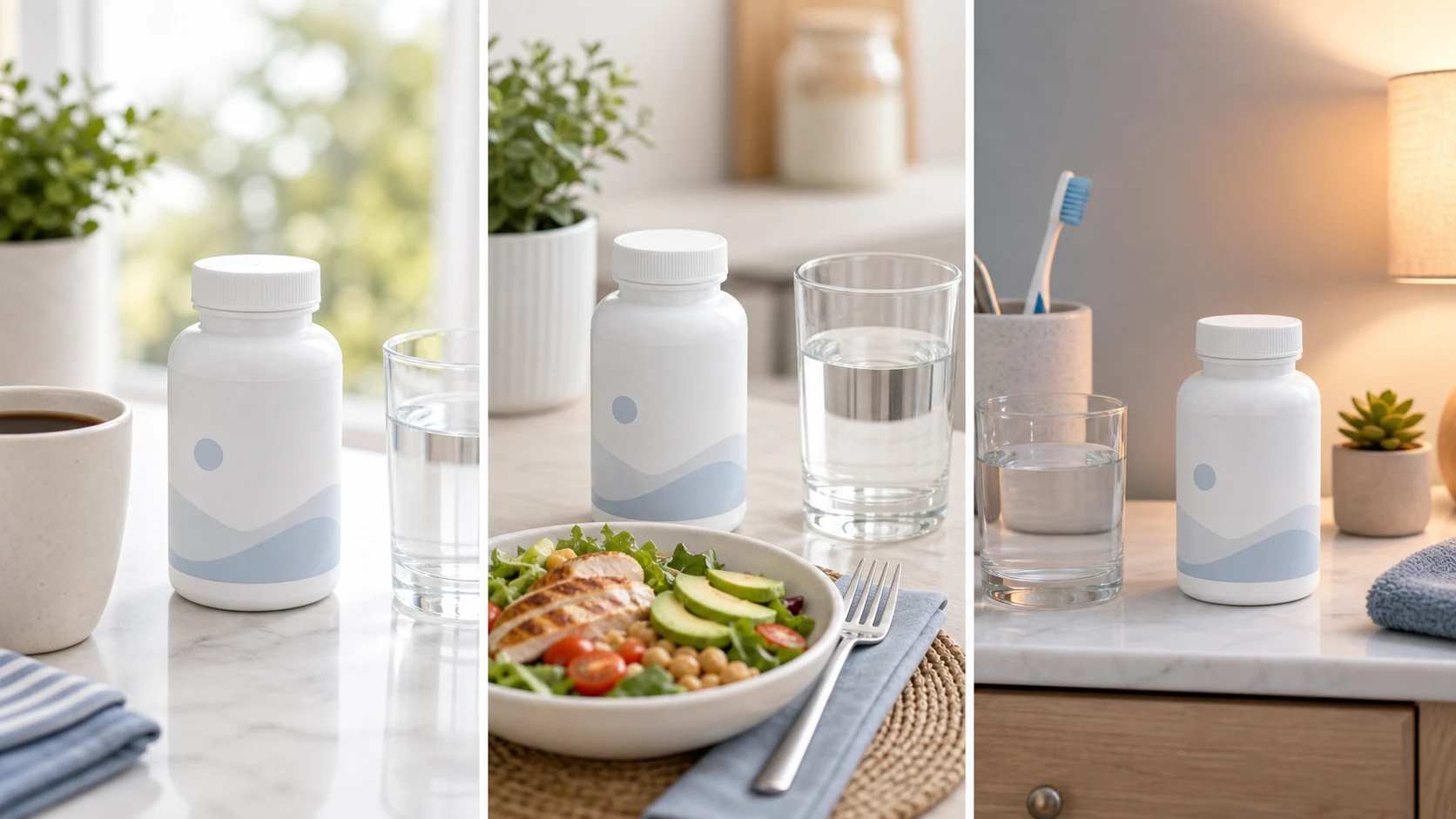
A good vitamin routine should not feel complicated. It should be simple, repeatable, and easy to remember even on busy days. Many people buy vitamins with good intentions, take them for a few days, miss a morning, forget again, and eventually leave the bottle sitting in a cabinet. The problem is usually not the vitamin. The problem is the system. A simple vitamin routine gives you a clear time, a clear place, a clear reminder, and a clear way to know whether you took your supplements that day.
Start With the Vitamins You Actually Take
Before you build a routine, get clear on what belongs in it. If your main problem is still remembering the habit at all, read how to remember to take vitamins first.
Make a Simple Vitamin List
The first step is writing down every vitamin or supplement you currently take.
This sounds obvious, but many people do not have one clear list. They have a multivitamin in the kitchen, magnesium by the bed, vitamin D in a drawer, collagen in a pantry, and something else they bought months ago but forgot about.
Create a simple list with:
- Product name
- Serving size
- Suggested time of day
- Whether it should be taken with food
- How many servings are left
- Any notes from the label
Your list does not need to be fancy. It can live in a notebook, notes app, spreadsheet, or vitamin reminder app. The point is to remove guesswork. Once you know what you take, you can decide when and how to take it.
A clear vitamin routine starts with a clear vitamin list.
Read the Label Before You Pick a Time
Your routine should follow the product directions, not random advice online.
Before choosing morning, night, empty stomach, or with food, read the Supplement Facts panel and suggested use instructions. Look for the serving size, number of servings, directions, warnings, and any storage instructions. Some supplements are easier to fit with meals. Some are better suited for evening routines. Some may have specific label guidance that matters.
You do not need to overthink every detail, but you do need to know what the product actually says.
A quick label check should answer:
- How many capsules, gummies, tablets, or scoops are in one serving?
- How often is it suggested?
- Does the label mention taking it with food?
- Does the label mention avoiding certain groups or situations?
- Does it have storage instructions?
- How many days will the bottle last?
The label turns your vitamin routine from a guess into a plan.
Remove What You Are Not Actually Using
A simple routine should be focused.
If you own twelve bottles but only truly intend to take three, do not build a routine around all twelve. That creates clutter, confusion, and guilt. Separate your supplements into three groups:
- Daily routine
- Occasional use
- Not using right now
Only the daily routine needs reminders. Occasional products can stay separate. Products you are not using should not sit in your daily routine area because they create visual noise.
The fewer decisions your vitamin routine requires, the easier it is to keep.
Start by knowing exactly what you take, what the label says, and what actually belongs in your daily routine.
Choose the Best Time for Your Routine
The best vitamin routine is the one that fits your real day.
If timing is the hardest part, start with best reminder times for vitamins before you add more products to the routine.
Build Around a Daily Anchor
A daily anchor is something you already do almost every day.
Instead of trying to remember vitamins from nothing, connect them to an existing behavior. This is often called habit stacking. The idea is simple: after one routine action, you do the new action.
Examples:
After I make coffee, I take my vitamins.
After I eat breakfast, I take my supplements.
After I brush my teeth, I take my nighttime vitamin.
After I fill my water bottle, I check Vitamin Alerts.
After I sit down at my desk, I mark my vitamins complete.
Anchors work because they reduce the need for memory. Your existing habit becomes the trigger.
A daily anchor gives your vitamin routine a natural place in your day.
Pick Morning, Night, or Split Routine
Most people should start with one simple routine time.
For many people, morning works well because it happens before the day becomes unpredictable. Breakfast, coffee, and the first glass of water are easy anchors. For others, mornings are rushed, so night is better. An evening routine can work well if you already have a reliable wind down pattern.
A split routine means some supplements are taken in the morning and others at night. This can be useful, but it is also easier to forget. If you are inconsistent right now, start with one routine time unless the label directions or your personal needs require more than one.
Simple options:
Morning routine: Best for people who eat breakfast, make coffee, or start the day at home.
Night routine: Best for people who have calm evenings and want to connect supplements to brushing teeth or bedtime.
Split routine: Best for people with a clear reason to separate supplements and enough consistency to manage two reminders.
Choose the schedule you can repeat, not the schedule that sounds perfect.
If you are choosing between early and late reminders, the guide on morning vs night vitamin routines can help you pick the easier starting point.
Match Vitamins With Food When It Makes Sense
A meal can make your routine easier to remember.
Many people do better when they take vitamins with breakfast, lunch, or dinner because meals are already part of the day. Food also gives the habit a natural cue: when you eat, you take what is scheduled.
A meal based routine can look like this:
- Breakfast: Multivitamin and daily essentials
- Lunch: Supplements that fit better midday
- Dinner: Evening supplements or products you prefer later
The exact schedule depends on your products and label directions. The practical point is that meals create structure. If you already eat at a reliable time, use that rhythm.
Connecting vitamins to meals can make the routine easier to remember and easier to repeat.
The right time is the time that fits your actual daily rhythm.
Make the Routine Easy to See
Your environment should help you remember.
Create a Vitamin Station
A vitamin station is one simple place where your routine happens.
It does not need to be elaborate. It just needs to keep your daily vitamins, water, and reminder system close together. The goal is to make the next action obvious.
A good vitamin station might include:
- Your daily vitamin bottles
- A pill organizer
- A glass or water bottle
- A small tray
- A visible note or routine card
- Your phone reminder or Vitamin Alerts checkoff
Good locations include a kitchen counter, breakfast area, desk drawer, coffee station, or bedside table. Choose a place that matches the time of day you selected.
A vitamin station reduces friction by keeping everything you need in one place.
Use a Weekly Organizer for Multiple Supplements
A weekly organizer can make a vitamin routine much easier.
If you take more than one product, opening several bottles every day can become annoying. A weekly organizer lets you prepare ahead of time, see what is scheduled, and quickly confirm whether you already took your vitamins.
This is especially helpful if you ask yourself, "Did I take them already?" A full compartment means you probably have not. An empty one means you probably did.
Basic setup:
- Choose a 7 day organizer.
- Fill it once per week.
Keep it near your routine location.
Check the correct day before taking anything.
Refill it on the same day each week.
A pill organizer turns your routine into a visual system instead of a memory test.
Keep Backup Vitamins Where They Help
Some people benefit from a backup routine.
For example, if you often forget before leaving home, you might keep a travel pack in your bag, desk, or suitcase. This is not for replacing your main routine. It is for saving the day when real life interrupts.
For a full travel setup, use how to remember vitamins when traveling so your routine does not disappear when your schedule changes.
Keep backups simple and safe. Use original labels when needed, avoid mystery containers, and do not leave supplements in places with heat, moisture, or unsafe access.
A backup plan helps you stay consistent when your normal routine breaks.
When your vitamins are visible, organized, and close to the routine, consistency becomes easier.
Add Reminders and Tracking
A routine needs a prompt and a record.
Set One Main Reminder
Start with one reminder, not five.
Your reminder should go off at the time you are most likely to act. If you set it for 7:00 AM but you are always rushing, it will become background noise. Set it for the moment your routine actually happens.
Better reminder examples:
- "Take vitamins with breakfast."
- "Take supplements after coffee."
- "Take nighttime vitamins after brushing teeth."
- "Check Vitamin Alerts and mark complete."
A good reminder tells you exactly what to do. A bad reminder just makes your phone buzz.
A useful reminder is specific, realistic, and connected to an action.
When you are ready to set the actual alert, follow the step-by-step guide on setting supplement reminders on your phone.
Track Completion Right Away
The best time to mark your vitamins complete is immediately after taking them.
If you wait until later, you may forget whether you took them. Tracking right away creates certainty. It also gives you a visual record of your consistency over time.
You can track with:
- Vitamin Alerts
- A habit tracker
- A calendar checkmark
- A notes app
- A weekly pill organizer
- A printed routine sheet
The method matters less than the timing. Take the vitamins, then mark them complete.
Tracking closes the loop so you know the routine actually happened.
Set a Weekly Supply Check Before You Run Out
Running out breaks the habit.
A simple vitamin routine should include a refill system. Most people do not stop taking vitamins because they intentionally quit. They stop because the bottle runs out, they forget to reorder, and the routine disappears.
Set a weekly supply check and reorder when you have about one to two weeks left. This gives you enough time to reorder without interrupting the routine.
Vitamin Alerts supports the daily reminder side today. Pair it with a weekly supply check so you notice when bottles are getting low before the reminder points to an empty bottle.
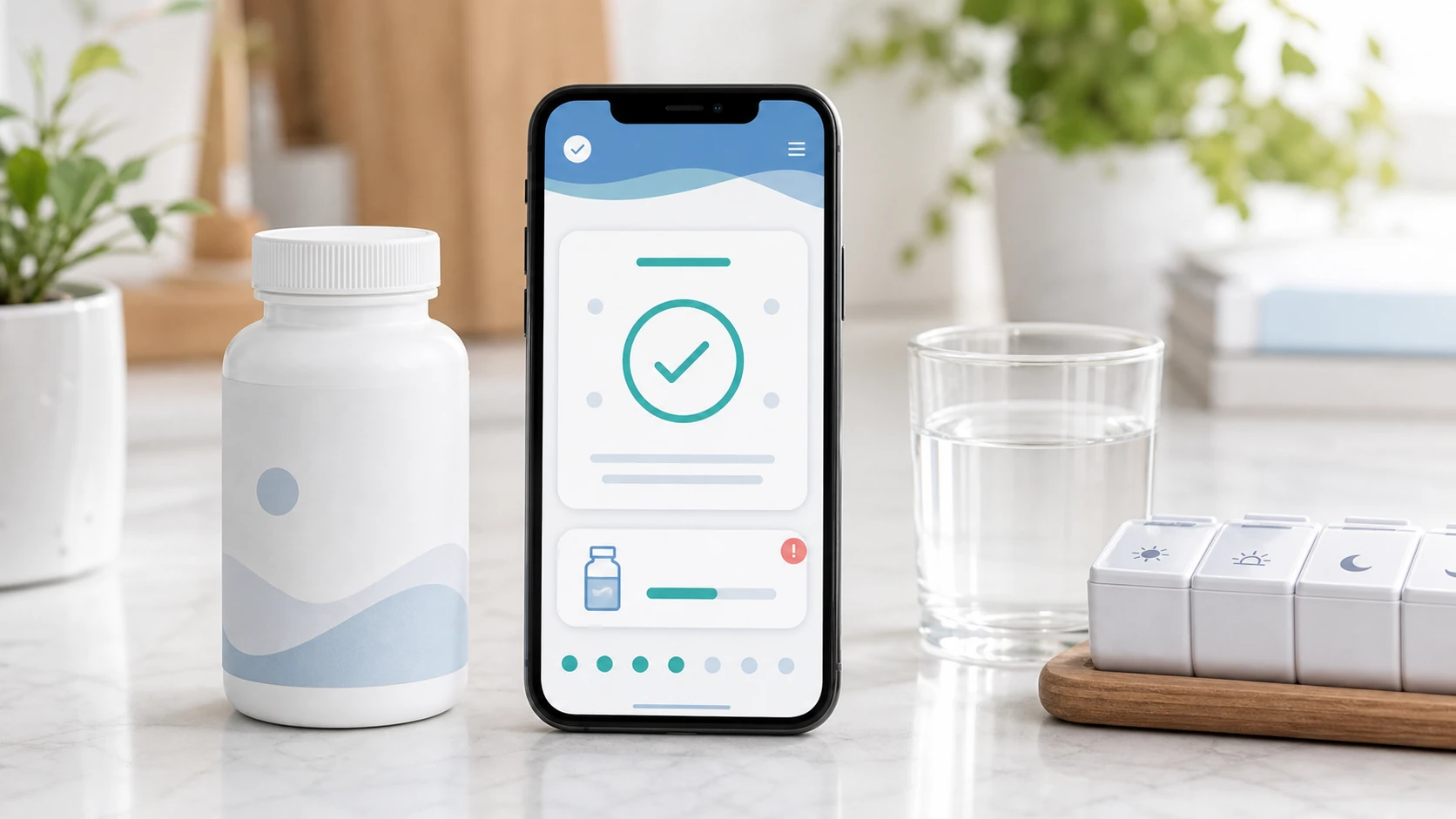
Weekly supply checks protect your routine before the bottle is empty.
Reminders prompt the habit, tracking confirms the habit, and weekly supply checks protect the habit.
Keep the Routine Simple Enough to Last
The best vitamin routine is one you can do on a normal day.
Use the Two Minute Rule
Your daily vitamin routine should take less than two minutes.
If it takes longer, simplify it. Put everything in one place. Use an organizer. Remove products you are not taking daily. Set one clear reminder. The routine should feel easy enough that you can do it when you are tired, busy, or distracted.
A two minute vitamin routine might look like this:
- Reminder goes off.
- Open organizer.
- Take vitamins with water.
- Tap complete.
- Move on with your day.
A short routine is more repeatable than a perfect routine.
Review Once Per Week
A weekly review keeps your routine clean.
Pick one day each week to refill your organizer, check supply, review your schedule, and remove anything that does not belong. This can take five minutes.
Weekly review checklist:
- Refill organizer.
Check which bottles are running low.
Confirm reminder times still work.
Remove clutter from your vitamin station.
Update your app or tracker if needed.
This keeps the routine from slowly becoming messy again.
A five minute weekly reset can save you from a month of inconsistency.
Do Not Change Everything at Once
A routine becomes fragile when you keep rebuilding it.
Start with one simple version and let it become familiar. Once it feels easy, you can improve it. You might add a nighttime reminder, create travel packs, or track low stock more carefully. But do not make the routine complex before it is consistent.
Build the habit first, then optimize it.
A simple routine that lasts is more valuable than an impressive routine you abandon.
Conclusion: Build a Vitamin Routine Around Real Life
A simple vitamin routine does not require a perfect schedule or a complicated system. It requires a clear list, a realistic time, a visible place, a helpful reminder, and a quick way to track completion. Start with the vitamins you actually take, connect them to a daily anchor, keep them easy to see, and mark them complete as soon as you take them. When the routine is simple, it becomes easier to repeat. When it is easier to repeat, you are far more likely to stay consistent.
FAQ
What is the best way to build a daily vitamin routine?
The best way to build a daily vitamin routine is to choose the vitamins you actually take, read the label directions, connect them to a daily habit, set a specific reminder, and track completion right after taking them.
Should I take vitamins in the morning or at night?
The best time depends on your supplement directions and your daily schedule. Morning works well for people with a steady breakfast or coffee routine. Night works well for people with calmer evenings. The best routine is the one you can repeat consistently.
How do I remember to take multiple supplements?
Use a weekly pill organizer, create a written vitamin schedule, and set reminders for each routine time. If possible, start with one main daily reminder before creating a more complex morning and night schedule.
What should be included in a vitamin routine?
A simple vitamin routine should include the product, serving size, time of day, whether it is taken with food, a reminder, a completion tracker, and a refill plan for when the bottle is running low.
Can a vitamin reminder app help me stay consistent?
Yes, a vitamin reminder app can help you stay consistent by reminding you when to take your supplements and helping you track completed doses. A weekly bottle check can handle supply until automatic supply tools are added.
Why do I stop taking vitamins after a few days?
Most people stop because the routine is not easy enough. The vitamins may be hidden, the reminder may come at the wrong time, the schedule may be too complicated, or there may be no tracking system. A simple routine fixes these problems by making the habit visible and repeatable.
Turn this guide into a real reminder routine.
Vitamin Alerts helps you add vitamins, choose routine times, test alerts, and come back to the same schedule tomorrow.
Comments
Public comments are coming later. For now, send article feedback or vitamin routine questions through the support page.
Contact support